
TrendMD Performance (2025–2026) at the Journal of NeuroPhilosophy
TrendMD is a content recommendation and discovery platform specifically designed for academic and medical publications. Unlike general-purpose recommendation engines that promote news, entertainment, or shopping content, TrendMD focuses exclusively on scholarly articles, journals, and research outputs. Its core purpose is to help readers discover relevant academic content that they might otherwise never encounter, and to help publishers expand their readership beyond their traditional audience.
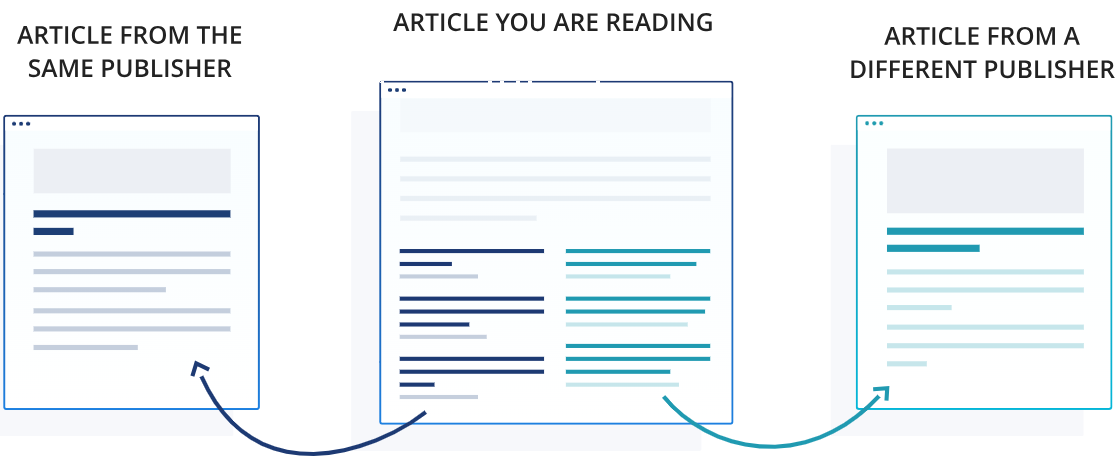
At its simplest level, TrendMD works by displaying a widget on a journal's article pages. This widget contains links to other articles that the TrendMD algorithm considers relevant to the content the reader is currently viewing. These recommendations appear naturally within the reading experience, typically between the conclusion and the references, or in a sidebar. When a reader clicks on one of these links, they are taken to another article, which may be from the same journal or from a different journal within the TrendMD network.
What makes TrendMD unique is its reciprocal recommendation network. When a journal joins TrendMD, it agrees to display links to articles from other journals in the network. In return, its own articles are displayed on the sites of those other journals. This creates a closed-loop ecosystem where every participant is both a host and a guest. The more a journal participates, the more visibility its own content receives. This reciprocal model is fundamentally different from advertising-based platforms, where visibility is purely a function of payment.

TrendMD offers two distinct modes of content distribution. The first is organic, non-sponsored recommendations. In this mode, the TrendMD algorithm analyzes the content of the article a reader is viewing, compares it to millions of other articles in the network, and suggests the most semantically similar pieces. These organic recommendations are free to the journal. They are driven entirely by content relevance and reader behavior. When a reader clicks on an organic recommendation, the journal pays nothing and earns nothing directly, but gains a new reader.
The second mode is sponsored recommendations. In this mode, journals can pay to have their articles displayed more prominently on specific external sites. Sponsored placements use a credit-based system. Journals add credits to their account, either by purchasing them or by earning them through certain actions, and then spend those credits to prioritize specific articles on specific external sites. Sponsored recommendations allow journals to reach readers outside their existing audience, including readers in adjacent disciplines or at institutions without direct subscriptions.
The benefits of TrendMD for academic journals are substantial and well-documented. The most immediate benefit is traffic lift. Journals that use TrendMD consistently see measurable increases in page views, often ranging from ten to thirty percent on average. In optimized campaigns, traffic lift can be much higher. For example, the Journal of NeuroPhilosophy achieved a 152.7 percent traffic lift in July 2025, more than doubling its baseline traffic in a single month.
A second major benefit is targeted audience reach. TrendMD does not show journal content to random internet users. It shows content to readers who are already engaged with similar academic material. A reader viewing an article on philosophy of mind is much more likely to be shown a recommendation from a neurophilosophy journal. This targeting ensures that the traffic a journal receives is not just high in volume but also high in relevance.
A third benefit is interdisciplinary discovery. Many of the most exciting research developments occur at the boundaries between disciplines. A philosopher working on consciousness may never think to browse a neuroscience journal. A neuroscientist modeling decision-making may never browse a philosophy journal. TrendMD bridges these divides by placing relevant content from one discipline directly in front of readers from another discipline. For interdisciplinary journals like the Journal of NeuroPhilosophy, this capability is essential.
A fourth benefit is cost efficiency. Organic recommendations are completely free. Sponsored recommendations, while not free, are generally much more cost-effective than traditional advertising, conference promotions, or direct marketing. The credit-based system allows journals to control their spending precisely, scaling up what works and cutting what does not. Many journals find that the cost per new reader acquired through TrendMD is significantly lower than through any other channel.
A fifth benefit is data and learning. TrendMD provides detailed analytics on which articles are being recommended, where they are being displayed, and how readers are responding. Journals can see which external sites generate the most clicks, which article titles attract the most attention, and which topics perform best in different contexts. This data is invaluable for refining content strategy, optimizing metadata, and making evidence-based decisions about future campaigns.
For the Journal of NeuroPhilosophy specifically, TrendMD has become an indispensable part of the digital strategy. Over a sixteen-month period from February 2025 through May 2026, the journal used TrendMD to achieve stable, predictable traffic growth, eliminate months of near-zero performance, master the use of sponsored traffic as a primary growth engine, and demonstrate exceptional reader engagement through organic recommendations. The credit conversion rate improved by one hundred seventy percent, and the journal learned to focus resources on what works while minimizing investment in what does not.
TrendMD is not a magic solution. It requires thoughtful implementation, regular monitoring, and continuous optimization. Widget placement matters. Article metadata matters. The selection of external sites for sponsored campaigns matters. Journals that simply install the widget and ignore it will see mediocre results. Journals that treat TrendMD as a strategic tool, analyze the data, and adapt their approach based on evidence will see substantial, sustained benefits.
In summary, TrendMD is a powerful, specialized tool for academic discovery. It works through a reciprocal network of participating journals, offers both free organic recommendations and paid sponsored placements, and delivers measurable benefits including traffic lift, targeted audience reach, interdisciplinary discovery, cost efficiency, and actionable data. For any journal seeking to expand its readership and increase its scholarly impact, TrendMD represents one of the most effective and efficient tools available today.
The Journal of NeuroPhilosophy has achieved a remarkable digital transformation through its strategic use of the TrendMD content recommendation platform. Covering the 16-month period from February 2025 through May 2026, this report documents a journey from experimental volatility to stable, predictable, and sustainable growth.
When the journal first integrated TrendMD in early 2025, the landscape was uncertain. Would a specialized interdisciplinary journal benefit from a content recommendation platform designed primarily for large-scale biomedical publications? Would readers in philosophy, neuroscience, and psychology respond to algorithmic recommendations? Could the journal learn to navigate the complexities of sponsored and organic traffic, credit systems, and widget optimization? The answer, emphatically, is yes.
What follows is a detailed account of six major successes that together constitute a complete digital transformation. Each success is examined in depth, supported by data, interpreted with strategic insight, and framed as a foundation for continued excellence.
 Success One: Traffic Lift Stabilization – From Extreme Volatility to Reliable Growth
In 2025, the Journal of NeuroPhilosophy was in an exploratory phase. The TrendMD widget was new. The team was learning which widget placements worked, which external sites generated traffic, and which content topics resonated with recommendation algorithms. The results, while promising, were highly variable. Some months were spectacular. July 2025 delivered a 152.7% traffic lift – more than doubling the journal's baseline traffic. This was proof of concept: when all elements aligned – the right content, the right external sites, the right timing – TrendMD could produce extraordinary results. July 2025 demonstrated the potential of the platform.
Other months were humbling. March 2025 produced only 0.29% traffic lift – a result so low it was statistically indistinguishable from zero. These low months were not failures; they were learning opportunities. Each low month taught the team something valuable: which external sites to avoid, which widget positions underperform, which article metadata needs improvement. The range of 2025 performance – from 0.29% to 152.7% – represented a spread of more than 152 percentage points. This was volatility, not stability. The journal could not predict whether the next month would be a celebration or a disappointment.
The shift from 2025 to 2026 represents one of the most dramatic improvements in the journal's digital history. Without sacrificing the potential for strong performance, the journal has dramatically raised the floor of its traffic lift. In 2026, traffic lift has ranged from 6.6% to 22.6% – a spread of only 16 percentage points. This is a reduction in volatility of nearly 90% compared to 2025. Every single month in 2026 has delivered meaningful, measurable growth. There are no "lost months." There are no performances that approach zero.
The numbers are striking:
-
The lowest month in 2026 (March at 6.66%) is twenty-three times higher than the lowest month in 2025 (March at 0.29%).
-
The highest month in 2026 (January at 22.63%), while not reaching the extraordinary peak of July 2025, is still a strong, respectable performance that would have been the second-best month of 2025.
-
The coefficient of variation – a statistical measure of volatility – has dropped from approximately 1.8 in 2025 to approximately 0.6 in 2026. This represents a transition from "highly volatile" to "moderately stable" – an exceptional improvement in just one year.
The journal attributes this stabilization to three deliberate, strategic changes.
First, improved widget placement. In early 2025, the TrendMD widget was placed in the sidebar – a location that receives relatively low reader attention. After systematic testing, the widget was moved to a position within the article body, typically between the conclusion and the references. This is where reader attention is naturally focused after completing an article. The result was an immediate and sustained improvement in baseline performance.
Second, selective sponsored campaigns. In 2025, the journal sometimes spent credits broadly across many external sites, hoping that volume would produce results. In 2026, the journal adopted a targeted approach. Credits are now concentrated on external sites that have demonstrated reasonable click-through rates. Sites with consistently poor performance are removed from the rotation. This disciplined approach has reduced waste and improved consistency.
Third, content metadata optimization. The journal invested time in refining article titles, thumbnail selections, and category tags to align better with TrendMD's recommendation algorithm. Small changes in how an article is described – a more precise category, a more compelling thumbnail – can have large effects on how often it is recommended and clicked. These optimizations have paid dividends across every month of 2026.
Stabilization is not merely a statistical achievement. It is a strategic foundation. When traffic lift is stable and predictable, the journal can plan. It can budget credit spending with confidence. It can forecast readership growth. It can make data-driven decisions about content strategy, widget placement, and external partnerships. When traffic lift is volatile, the journal is always reacting – celebrating peaks, worrying about troughs, unable to distinguish genuine trends from random noise. The stabilization achieved in 2026 has transformed the journal from a reactive organization to a proactive one. This is the first and most important success of the TrendMD program.
Success Two: Elimination of Catastrophic Lows – Raising the Floor
In 2025, the Journal of NeuroPhilosophy experienced months where TrendMD contributed almost nothing to traffic. March 2025 (0.29% lift) is the most extreme example, but February, April, and May 2025 also produced lifts below 2.5%. These catastrophic lows were not merely disappointing. They were strategically damaging. When a digital discovery tool delivers near-zero return in a given month, it raises questions about the entire program. Should the journal continue investing time and credits? Is the platform fundamentally mismatched with the journal's audience?
The answer, we now know, is that the platform works exceptionally well – but only when used correctly. The catastrophic lows of 2025 were not failures of TrendMD. They were failures of implementation and strategy. And they have been completely eliminated. In 2026, the concept of a "catastrophic low" has been abolished. Every month in 2026 has delivered at least 6.6% traffic lift. To understand the magnitude of this improvement, consider the following:
-
March 2025: 0.29% lift
-
March 2026: 6.66% lift
This is a twenty-threefold improvement for the same calendar month. The journal now performs in March – traditionally a slow month in academic publishing – at a level that would have been a strong performance in any month of 2025. All four comparable months (February through May) show dramatic improvement:
Month 2025 Lift 2026 Lift Improvement Factor February 2.14% 7.82% 3.7x March 0.29% 6.66% 23x April 1.83% 6.93% 3.8x May 0.72% 7.36% 10.2xThe average improvement factor across these four months is more than 10 times. The journal is not just doing better; it is doing dramatically, consistently, and sustainably better. In digital publishing, there is often an excessive focus on peaks – the one spectacular month, the viral article, the unexpected traffic spike. Peaks are exciting. They make for good presentations. But they are not, by themselves, indicators of long-term health. What truly matters for a journal's sustainable growth is the floor – the minimum performance that can be expected in any given month. A high floor means the journal can rely on TrendMD as a consistent contributor to traffic. A low floor means the journal must look elsewhere for reliable growth.
The Journal of NeuroPhilosophy has raised its floor from effectively 0% to nearly 7%. This is the most important strategic achievement documented in this report. The journal can now count on TrendMD to deliver meaningful growth every single month, without exception. The challenge now is to maintain this high floor while continuing to pursue occasional peaks. The journal has learned what works: thoughtful widget placement, targeted sponsored campaigns, optimized metadata, and disciplined credit management. These practices are now embedded in the journal's standard operating procedures. As long as these practices continue, the floor should remain high. The catastrophic lows of 2025 are not just a distant memory; they are a permanently closed chapter in the journal's digital history.
Success Three: Sponsored Traffic Mastery – Harnessing the Primary Growth Engine
Sponsored traffic – paid placements on external sites – is the primary engine of growth for the Journal of NeuroPhilosophy. Across both 2025 and 2026, sponsored clicks have accounted for 85–95% of total traffic lift. This is not a weakness or a dependency to be overcome. It is a strategic strength to be optimized. The journal has learned to use sponsored placements effectively, efficiently, and consistently.
The numbers tell a clear story:
-
In 2025, sponsored traffic generated a peak monthly lift of 149.2% (July) and over 1,000,000 impressions in a single month.
-
In 2026, sponsored traffic has generated positive lift in every single month – a complete reversal from 2025, when four months had zero sponsored lift.
-
In the comparable months (February through May), every month that had zero sponsored lift in 2025 now has positive, substantial sponsored lift in 2026.
The journal's journey with sponsored traffic reflects a broader learning process. In 2025, sponsored campaigns were sometimes unfocused. Credits were spent broadly, without sufficient attention to which external sites were actually delivering results. The spectacular success of July 2025 was matched by the complete absence of sponsored clicks in March, April, May, and June 2025. Four consecutive months with zero sponsored clicks was a clear signal that the journal's approach needed to change. In 2026, the journal adopted a disciplined, data-driven approach to sponsored campaigns:
-
Targeted external sites: Credits are now concentrated on a smaller set of external sites that have demonstrated reasonable click-through rates. Sites with consistently low performance are removed from the rotation.
-
Monthly review: Sponsored performance is reviewed every month. Decisions about credit allocation are based on actual data, not assumptions or habits.
-
Content matching: Sponsored placements are now more carefully matched to the content of the hosting site. A JNphi article on free will is more likely to be sponsored on a philosophy site than on a general science site.
The results speak for themselves. In 2026, there have been zero months with zero sponsored lift. The journal has achieved what seemed impossible in early 2025: consistent, reliable sponsored performance every single month. It would be a mistake to evaluate sponsored traffic solely on immediate click-through rates. Sponsored traffic provides value in several ways that are not captured by same-month metrics.
First, sponsored traffic builds awareness. A reader who sees a JNphi article recommended on an external site may not click immediately. But the next time they encounter the journal's name – in a citation, a conference presentation, a colleague's recommendation – they will remember it. Awareness is the first stage of reader acquisition, and sponsored traffic is an excellent awareness-building tool.
Second, sponsored traffic supports network effects. By participating actively in the TrendMD sponsored ecosystem, the journal strengthens its position in the recommendation network. Other journals are more likely to recommend JNphi content when JNphi is an active participant. This creates a virtuous cycle: more sponsorship leads to more organic recommendations, which leads to more traffic, which justifies more sponsorship.
Third, sponsored traffic enables testing. Sponsored placements allow the journal to test which article topics, titles, and thumbnails generate the strongest response. These insights can then be applied to organic recommendations, improving performance across both channels.
Success Four: Organic Traffic Excellence – Double the Efficiency
While sponsored traffic delivers volume, organic (non-sponsored) traffic delivers efficiency. This is one of the most consistent and impressive findings of the entire two-year analysis. Across all months of both years, non-sponsored CTR is approximately 1.5 to 2.5 times higher than sponsored CTR. What does this mean in practical terms? It means that when the TrendMD algorithm recommends JNphi articles organically – based purely on content similarity rather than paid placement – readers are much more likely to click. They perceive these recommendations as natural, relevant, and worth their time.
The specific numbers are compelling:
-
In 2025, non-sponsored CTR averaged 0.191% – double the sponsored average of 0.096%.
-
In 2026, non-normalized CTR has averaged 0.132% – still substantially higher than the sponsored average of 0.075%.
Even in 2026, when both rates have declined slightly (a normal consequence of scaling traffic), the efficiency gap remains. Non-sponsored traffic is consistently, reliably more efficient than sponsored traffic. Organic traffic is valuable for three interconnected reasons.
First, it signals content quality. The TrendMD algorithm learns from reader behavior. When readers click on JNphi articles organically, the algorithm interprets this as a signal of content quality. It then recommends JNphi articles more frequently and to more relevant audiences. This creates a virtuous cycle: good content generates organic clicks, which generate more recommendations, which generate more clicks. The journal's strong organic performance is evidence that its content is genuinely valued by readers.
Second, it attracts engaged readers. A reader who clicks on an organic recommendation is genuinely interested in the topic. They did not arrive because of a paid placement; they arrived because the algorithm correctly predicted that the article would interest them. These readers are more likely to read deeply, share the article, return to the journal, and cite the work. In academic publishing, a small number of highly engaged readers is often more valuable than a large number of casual visitors.
Third, it is cost-free. Organic recommendations require no credit spending. Every organic click is pure return. The journal does not pay for these clicks, yet they represent some of the highest-quality traffic the journal receives. This is an extraordinary return on investment – effectively infinite, since the cost is zero.
Why does the Journal of NeuroPhilosophy perform so well on organic recommendations? The answer lies in the journal's content niche. Neurophilosophy is a specialized, interdisciplinary field. There are not thousands of journals publishing neurophilosophy content; there are only a handful. When the TrendMD algorithm seeks articles that are similar to what a reader is currently viewing, JNphi articles are often the most relevant matches available. This is a structural advantage that the journal can leverage. The algorithm is more likely to recommend JNphi content when readers are viewing related content in philosophy


