
JNφphi Editorial – Consciousness at the Crossroads: Neurophilosophy, Identity, and the Future of Mind in an Era of Technological Transformation
The fifth volume (2026:1) of the Journal of NeuroPhilosophy emerges during a period of extraordinary intellectual convergence. Questions once considered primarily philosophical—What is consciousness? What constitutes personal identity? Is free will real? Can machines ever become conscious?—are now increasingly shaped by developments in neuroscience, cognitive science, artificial intelligence, quantum theory, psychiatry, and computational modeling. As empirical sciences advance deeper into the mechanisms of cognition and subjective experience, philosophy is no longer merely interpreting scientific discoveries after the fact; rather, it has become an active partner in framing, criticizing, and extending the conceptual boundaries of those discoveries.
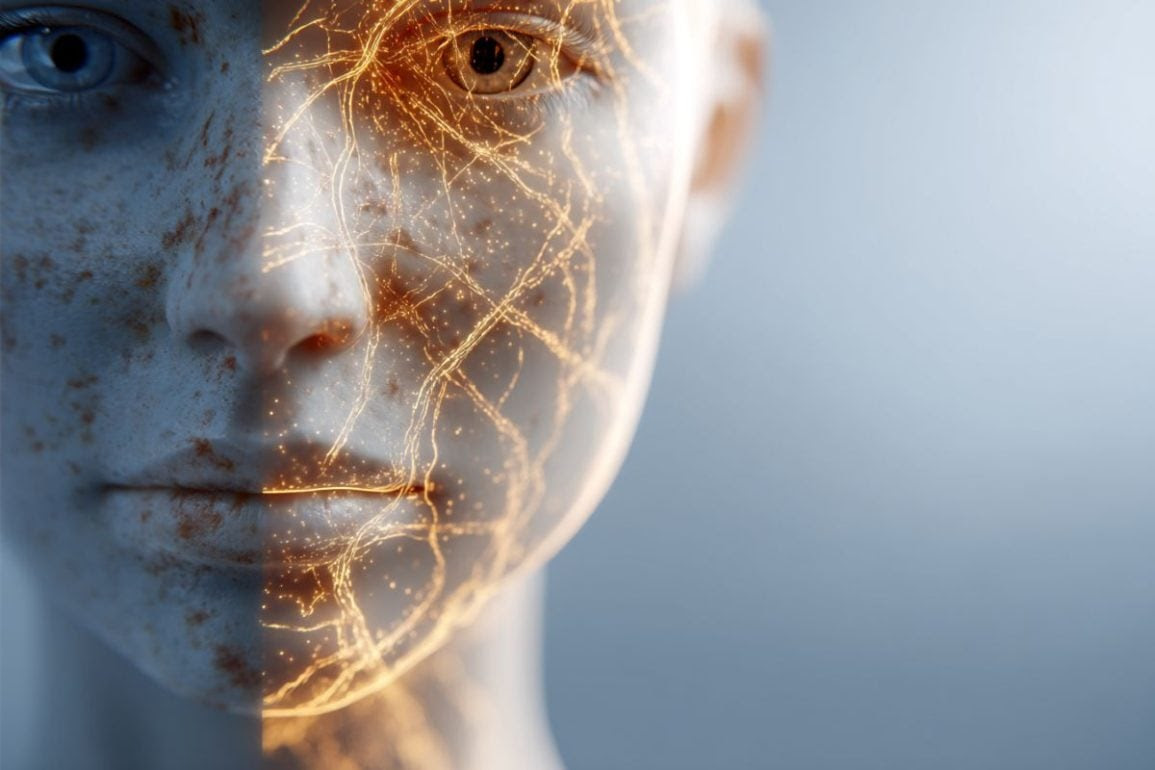
This issue reflects precisely that interdisciplinary transformation. Across review articles, theoretical investigations, opinion papers, empirical analyses, and philosophical hypotheses, the contributions collected here collectively demonstrate that consciousness studies can no longer proceed within isolated disciplinary silos. Instead, the field increasingly requires integrative frameworks capable of addressing not only neural mechanisms, but also phenomenology, embodiment, narrative identity, ethics, technological mediation, and the metaphysical implications of mind itself.
One of the central themes running throughout this volume is the growing influence of predictive and inferential models of cognition. In their extensive review, Predictive Processing and Active Inference: A Comprehensive Review of Theoretical Foundations, Neural Mechanisms, and Clinical Implications in Cognitive Science, Taruna Ikrar, Wachyudi Muchsin, and Alfi Sophian examine how predictive processing has evolved from a computational hypothesis into a potentially unifying paradigm for understanding perception, action, emotion, and psychopathology. Their work highlights an increasingly influential idea within cognitive science: the brain may not passively receive reality, but actively construct it through probabilistic modeling and continuous prediction-error minimization. Such perspectives profoundly reshape classical assumptions about perception, agency, and conscious awareness itself.
The implications of predictive frameworks extend far beyond neuroscience. They intersect directly with philosophical debates regarding the nature of selfhood and subjectivity. Hasan Belli and Selin Lacin, in The Many within the One: A Neurophilosophical Inquiry into Consciousness, Identity, and Dissociation, explore how dissociative phenomena challenge unified models of consciousness and personal identity. Their contribution demonstrates that the self may not be a singular, indivisible entity, but rather a dynamically organized process vulnerable to fragmentation, reconstruction, and contextual modulation. In doing so, the article contributes to a broader neurophilosophical reconsideration of what it means to remain “the same person” across time and changing mental states.
Questions concerning agency and responsibility become even more urgent when considered alongside rapid developments in neurotechnology. In NeuroPhilosophy and Free Will: Bridging Neuroscience, Philosophy, and Society in the Age of Neurotechnology, Taruna Ikrar and Alfi Sophian revisit one of philosophy’s oldest debates under contemporary scientific conditions. Neuroscientific findings increasingly complicate intuitive notions of autonomous decision-making, yet social, legal, and ethical systems continue to depend heavily upon assumptions of agency and accountability. The article demonstrates that debates surrounding free will are no longer abstract metaphysical exercises alone; they now possess immediate implications for criminal justice, mental health, human enhancement technologies, and emerging neuroethical frameworks.
Similarly, Erkan Tuna’s contribution, What Must a Successful Theory of Consciousness Explain?, addresses a foundational problem within contemporary consciousness research: explanatory insufficiency. The article systematically evaluates what any comprehensive theory of consciousness must account for across philosophy, neuroscience, psychology, and physics. Rather than advocating prematurely for a single explanatory framework, the work reveals the multidimensional complexity of consciousness itself. Any successful theory must simultaneously explain subjective experience, neural correlates, temporal continuity, embodiment, intentionality, and self-referential awareness—an extraordinarily demanding task that exposes the limitations of reductionist models.
The plurality of perspectives represented in this issue is particularly important because consciousness research increasingly confronts the limits of disciplinary reductionism. While neuroscience can identify correlates of conscious processes, it does not necessarily explain why subjective experience exists at all. Computational models may simulate aspects of cognition, yet simulation alone does not establish phenomenological awareness. Physics may illuminate informational or quantum dimensions of reality, but whether such models genuinely explain consciousness remains contested. Neurophilosophy therefore occupies a unique intellectual position: it does not merely synthesize existing disciplines, but interrogates the assumptions underlying them.
This interrogation becomes especially visible in the contributions examining machine consciousness and artificial intelligence. In Planck Time and the Chemical Soup: The Quantum and Metaphysical Limits of Imitating Consciousness in Machines, Sultan Tarlacı critically examines whether artificial systems can genuinely reproduce conscious experience or merely emulate cognitive behavior. The article argues that consciousness may emerge from biological, temporal, and quantum constraints that are fundamentally inseparable from living systems themselves. Such arguments challenge increasingly popular assumptions that sufficiently advanced computational complexity alone will inevitably produce conscious machines.
This concern resonates strongly with broader societal developments. Artificial intelligence systems are becoming progressively more capable of generating language, images, decisions, and forms of adaptive behavior once considered uniquely human. Yet capability must not be confused with subjectivity. The philosophical distinction between behavioral simulation and phenomenal awareness remains one of the defining intellectual challenges of the twenty-first century. The current issue repeatedly returns to this distinction, emphasizing that understanding consciousness requires more than functional replication.
Related questions emerge in Michael Remler’s Quantum Mechanics as Scientific Panpsychism, which attempts to bridge matter, evolution, and consciousness through quantum-determined frameworks. Whether one accepts or rejects such proposals, their growing presence within scientific and philosophical discourse reflects a deeper dissatisfaction with strictly mechanistic accounts of mind. Increasingly, scholars are revisiting foundational assumptions about matter, causality, information, and subjectivity itself.
George Goutos’ Perspectival Uniqueness, the Individuation of Consciousness, and the Vertiginous ‘Why Am I Me?’ further deepens this inquiry by confronting one of the most intimate and philosophically disorienting aspects of conscious existence: perspectival uniqueness. Why does experience occur from a particular first-person perspective? Why is consciousness individuated at all? Such questions resist straightforward empirical resolution because they concern the structure of subjectivity itself rather than externally observable behavior. Yet these problems remain central to any complete understanding of consciousness.
At the same time, several articles in this issue emphasize the narrative and socially embedded dimensions of conscious life. Hamid Zand and Katayoun Pourvali, in Consciousness as a Narrativized Self, explore how inner thought and abstract cognition contribute to the construction of conscious experience. Their perspective reminds us that consciousness is not merely biological activity occurring inside isolated brains; it is also shaped through language, memory, culture, temporality, and interpersonal meaning-making. Consciousness, from this perspective, is fundamentally interpretive and self-constructive.
The social dimensions of cognition and human organization also appear in Jian Ding’s The Social System Defined by Trialism, demonstrating that neurophilosophical inquiry increasingly extends beyond individual cognition into broader analyses of collective systems, institutions, and societal dynamics. Such expansions are important because emerging neurotechnologies and artificial intelligence systems will inevitably reshape not only individual minds, but also political structures, economic systems, and cultural identities.
Even historically and spiritually framed contributions in this volume participate in this broader interdisciplinary dialogue. Nandor Ludvig’s St. Paul’s Illuminating Vision Protected by the Non-Christian Jewish King Agrippa II to Make the Spread of Christianity Possible examines illuminating visions through the lens of cosmological neuroscience, reflecting the journal’s openness to exploring intersections among consciousness, spirituality, history, and neurocognitive interpretation. Such contributions remind us that consciousness has always occupied a space simultaneously scientific, existential, symbolic, and cultural.
The diversity of perspectives represented throughout this issue reflects an important methodological reality: consciousness studies may currently be in a pre-paradigmatic phase. No single theory—whether neuroscientific, computational, phenomenological, informational, or quantum—yet possesses sufficient explanatory power to account comprehensively for conscious experience. Rather than viewing this plurality as a weakness, however, it may represent the field’s greatest intellectual strength. Genuine progress may emerge not through premature theoretical closure, but through sustained dialogue among competing frameworks.
Importantly, this issue also highlights the ethical and societal urgency of neurophilosophical inquiry. Questions concerning cognitive liberty, neural privacy, technological augmentation, algorithmic decision-making, and artificial consciousness are no longer speculative future concerns. They are rapidly becoming practical political and ethical realities. As neuroscience increasingly acquires the capacity not merely to observe but also to modify cognition, humanity faces unprecedented questions concerning autonomy, identity, and moral responsibility.
In this context, neurophilosophy serves a uniquely necessary function. It provides conceptual tools for critically evaluating scientific assumptions while simultaneously ensuring that philosophical reflection remains informed by empirical reality. Neurophilosophy therefore operates not as an auxiliary discipline, but as an essential intellectual mediator between the sciences of the brain and the lived realities of conscious existence.
As the Journal of NeuroPhilosophy enters its fifth year, we are encouraged by its expanding international reach, increasing interdisciplinary engagement, and growing contribution to contemporary debates concerning mind and consciousness. The remarkable diversity of contributions in this volume demonstrates that neurophilosophy has evolved into a genuinely global conversation involving researchers from multiple disciplines, methodological traditions, and cultural perspectives.
Yet perhaps the most important lesson emerging from this issue is epistemic humility. Consciousness remains the most immediate aspect of existence and simultaneously the most elusive. Every explanatory advance reveals further conceptual depths. The closer science approaches the mechanisms of awareness, the more profound become the philosophical questions surrounding meaning, subjectivity, identity, and existence itself.
This issue therefore does not claim to resolve the mystery of consciousness. Rather, it seeks to illuminate the evolving landscape of inquiry surrounding it. By bringing together neuroscience, philosophy, psychology, artificial intelligence, physics, and social theory, this volume reflects the conviction that understanding consciousness will require intellectual cooperation across domains once considered separate.
The future of consciousness studies may ultimately depend not on reducing mind to a single explanatory principle, but on developing integrative frameworks capable of respecting both the biological foundations and the irreducible experiential dimensions of conscious life. In that pursuit, neurophilosophy will continue to play a vital role. Read to Issue
— The Editorial Team


